UFC Event Schedule in UK Time: When Fights Start and How to Plan Your Bets
 Available in US

My alarm went off at 2:45 AM on a cold January morning. I made a coffee, opened my laptop, and settled in for what turned out to be one of the best UFC cards of the year. That’s the reality of being a serious UFC bettor in the UK — the biggest events happen while most of Britain is asleep. It took me a few years to stop treating the timing as an inconvenience and start treating it as an edge. Fewer UK bettors are active at 3 AM, which means less public money in the live markets, which means less noise distorting the in-play odds. If you can stay awake, the early hours can be surprisingly productive.
UFC runs events nearly every weekend of the year, and the start times follow a predictable pattern based on the event’s location and format. Understanding that pattern is essential for UK bettors — not just for scheduling purposes, but for planning your live betting windows, managing your energy for the fights that matter most to your bankroll, and knowing when the markets will be most and least liquid.
Typical UFC Event Start Times in the UK
The standard UFC event held in the United States follows a three-card structure: early prelims, prelims, and main card. For UK viewers and bettors, the start times translate roughly as follows. Early prelims begin around 11 PM or midnight UK time (GMT/BST depending on the time of year). The main prelim card starts at approximately 1 AM. The main card, featuring the headline bouts, typically begins between 3 AM and 4 AM, with the main event fight usually starting around 5 AM or later.
UFC events held in other time zones shift these windows. Cards in Abu Dhabi or the Middle East start much earlier for UK audiences — main cards around 8 PM or 9 PM GMT, making them far more accessible for British bettors. Events held in Australia or East Asia can produce main cards in the late morning UK time. European-based events, though relatively rare, offer the most convenient schedule, with main cards typically starting around 9 PM or 10 PM local time.
The UFC typically stages events around 42-44 weekends per year. That figure comes from the promotion’s commitment to an “always-on” event calendar — a schedule density that Trip Stoddard of bet365 described as creating a powerful environment for real-time betting. For UK bettors, this means nearly every Saturday night (extending into Sunday morning) offers a UFC card with active betting markets.
One practical consideration that catches newer bettors: British Summer Time shifts the effective UK start times by one hour. A main card that starts at 3 AM GMT during winter starts at 4 AM BST during summer. If you’re setting alarms or planning your viewing schedule, double-check whether the UK is currently on GMT or BST — the hour difference sounds trivial but matters when you’re trying to wake up for a specific fight on the main card.
PPV, Fight Night and Numbered Events Explained
UFC events fall into several categories, and the category affects both the timing and the betting market depth. Pay-per-view events — the numbered UFC cards (UFC 300, UFC 310, etc.) — are the premium product. These feature the biggest names, the most anticipated matchups, and five-round main events with championship implications. PPV main cards in the US follow the standard late-night UK schedule described above. UFC 229, the Khabib vs McGregor event, generated 2.4 million PPV purchases — a record that still stands and illustrates the commercial scale of the promotion’s biggest cards.
Fight Night events are the UFC’s weekly programming, broadcast on ESPN or ESPN+ in the US and available through various partners internationally. These cards feature ranked fighters and competitive matchups but generally lack the star power of PPV events. The timing is similar to PPV cards when held in the US, but Fight Nights are more frequently staged internationally, which can produce more UK-friendly start times.
The Paramount+ deal — a seven-year, $7.7 billion exclusive media rights agreement signed in 2025 — shifted the US broadcasting landscape for UFC. For UK bettors, the distribution details matter less than the fact that the deal ensures the UFC will continue staging events at the current frequency or higher, maintaining the regular betting opportunities that make MMA wagering a viable year-round activity.
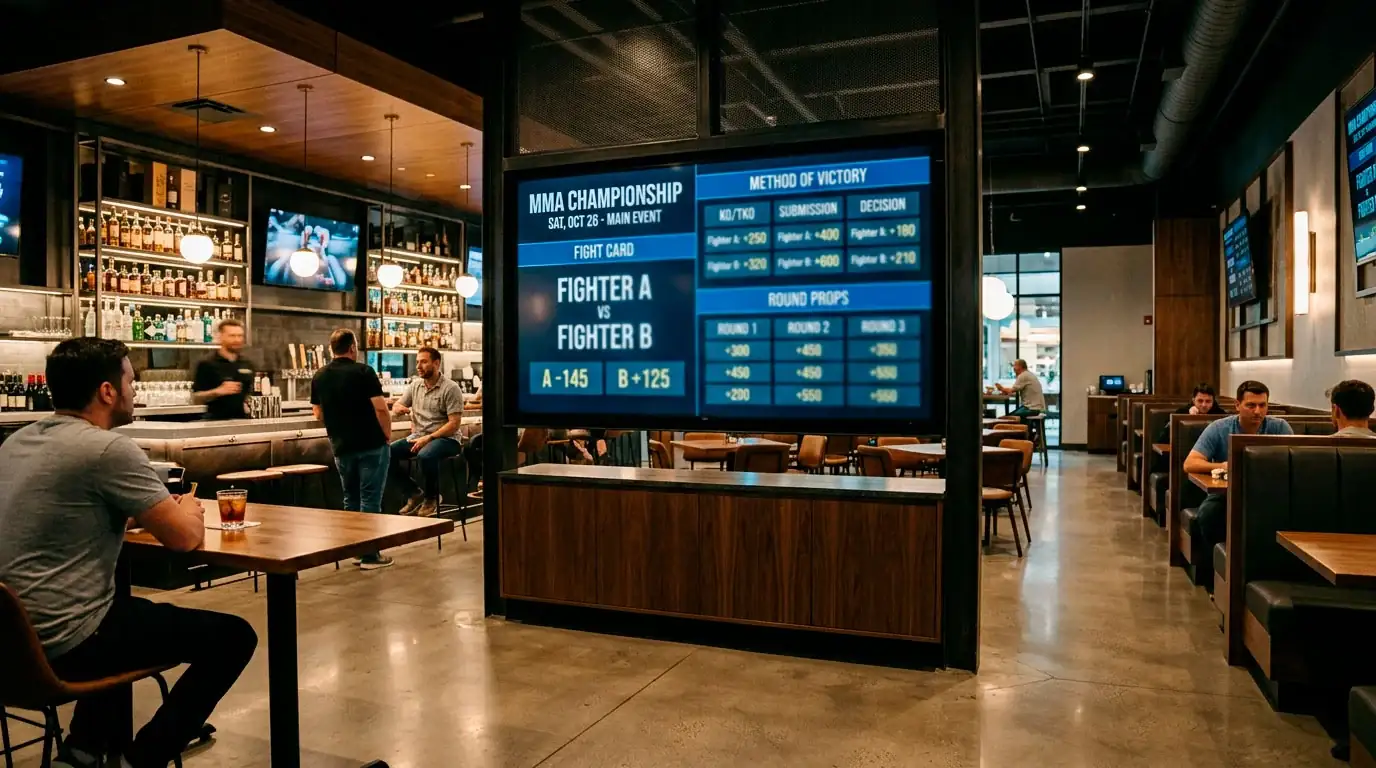
From a betting perspective, the distinction between PPV and Fight Night events affects market depth and liquidity. PPV cards attract significantly more betting volume, which means tighter odds, more available markets (props, round betting, method of victory), and faster line movement. Fight Night cards may have more limited markets, wider spreads, and less responsive in-play pricing. Adjusting your expectations for what’s available based on the event tier helps you plan your betting approach before the card begins.
Planning Live Bets Around UK Schedules
Nicholas Smith, UFC’s SVP of global partnerships, described bet365 as a natural fit for UFC because they “understand fight fans and how they engage with the sport in real time.” That real-time engagement hits differently at 4 AM than it does at 9 PM, and planning for the timing is as much a part of your betting strategy as analysing the fights themselves.
My approach for US-based UFC events is to do all my pre-fight analysis and place all my pre-fight bets during the day on Saturday. By the time the card starts in the early hours of Sunday morning, I’ve already identified which fights I might want to bet live on and what conditions would trigger those bets. This preparation means I’m not trying to analyse fighters at 3 AM with half-closed eyes — I’m simply watching for the specific signals I identified earlier and executing decisions I’ve already made in principle.
If staying up for the entire card isn’t realistic — and it often isn’t, especially for cards with twelve or thirteen fights — prioritise the fights where your live betting edge is highest. For most bettors, that means the main card and, specifically, the co-main and main events. These are the fights with the most liquid live markets, the most detailed pre-fight analysis available, and the widest odds movement when the action doesn’t go as expected.
Setting alarms for specific fights rather than trying to watch the entire card is a legitimate strategy. If the main event is the only bout you’ve identified for live betting, set an alarm for approximately the expected start time (calculate backward from the main card start and allow roughly 30-40 minutes per preceding fight). You’ll sacrifice the experience of watching the whole event, but you’ll be fresher and sharper for the bet that actually matters to your bankroll.
For Abu Dhabi or European events, the more accessible UK timing changes the calculation. When the main card starts at 8 PM or 9 PM, you can engage with the full card in a normal evening context, which typically improves decision-making quality. I’ve noticed that my live betting results are measurably better on events with UK-friendly timing, simply because I’m more alert and processing information more accurately than I am at 4 AM. If you’re selective about which events to bet live on, weighting toward events with favourable timing is a rational approach that respects the reality of how UFC live betting performance depends on your cognitive state.
Making the Schedule Work for You
The UFC’s event calendar isn’t going to adapt to UK time zones. That’s a constraint, not an excuse. The bettors who treat the schedule as a logistical challenge to be managed — rather than a reason to bet impulsively or skip analysis — are the ones who consistently outperform. Plan your week around the card, do your analysis in advance, decide before the first fight whether you’re watching the whole event or targeting specific bouts, and accept that some of the best UFC betting opportunities will require an alarm clock and a strong cup of coffee. The market doesn’t care what time zone you’re in; it only cares whether your analysis is sound.
What time do UFC main cards typically start in the UK?
For US-based events, UFC main cards typically start between 3 AM and 4 AM UK time (GMT), with the main event fight usually beginning around 5 AM or later. During British Summer Time, add one hour to those estimates. Events held in Abu Dhabi or the Middle East offer more accessible timing, with main cards starting around 8 PM to 9 PM UK time. European events, though less common, typically start around 9 PM to 10 PM local time.
Do UK bookmakers keep UFC markets open during early-morning events?
Yes. Major UK bookmakers maintain their UFC betting markets throughout events regardless of the UK time. Pre-fight markets remain open until each bout begins, and in-play markets are available during fights for operators that offer live UFC betting. Market liquidity may be lower during early-morning UK hours because fewer bettors are active, but the markets themselves remain accessible around the clock for the duration of the event.
Created by the ”how Does ufc Betting Work” editorial team.