UFC Live Betting: How In-Play Wagering Works on Fight Night
 Available in US
Table of Contents
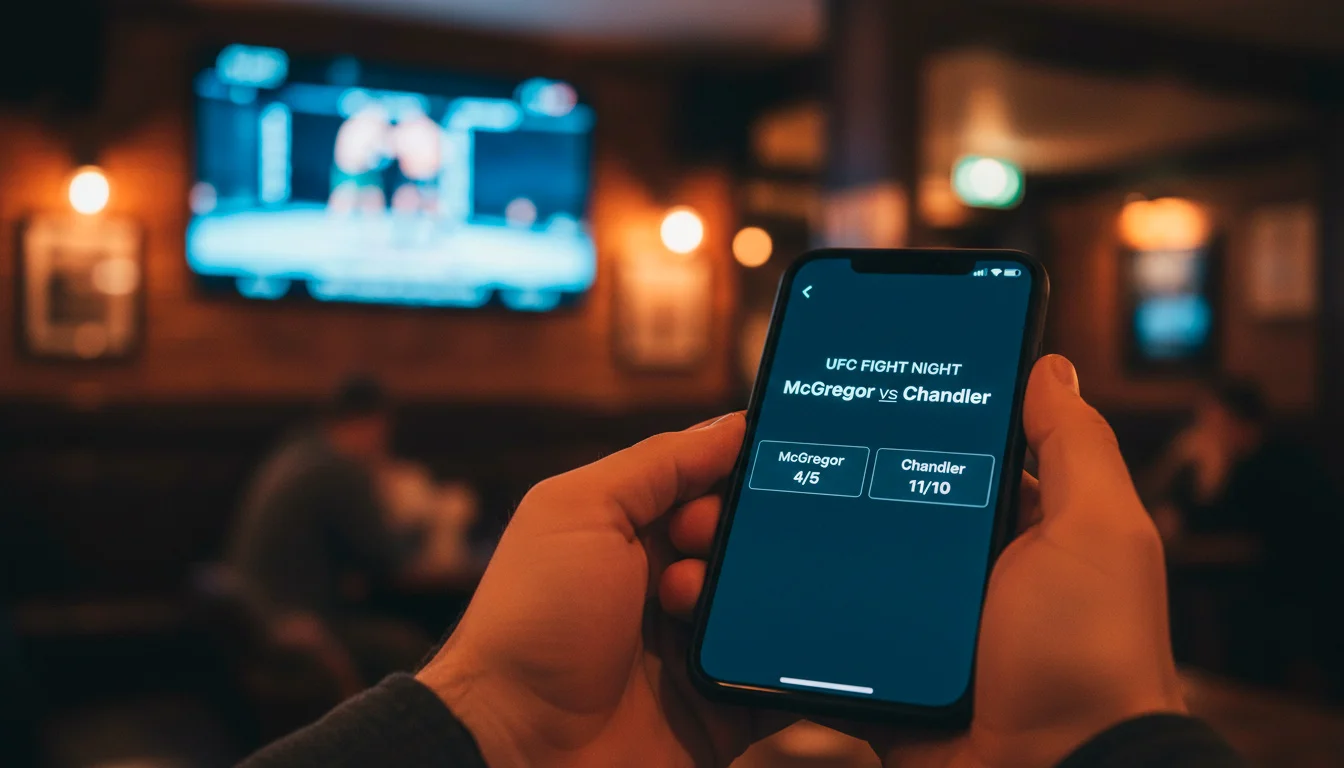
The first time I placed a live bet during a UFC fight, it was purely reactive. A heavy favourite had just been rocked in round one, the odds on his opponent went from 5/1 to 6/4 in about ninety seconds, and I jumped in without thinking. He recovered, dominated the next two rounds, and I watched my impulsive bet evaporate. That loss taught me something that no pre-fight analysis ever could: live betting in UFC is a completely different discipline from pre-fight wagering, and it rewards patience over reflexes.
UFC events generate 11% of all live-bet clicks on major platforms during fight nights — a remarkable figure for a sport with no halftime, no substitutions, and fights that can end with a single punch at any moment. That volatility is what makes UFC live betting both thrilling and dangerous. Odds swing wildly between rounds, markets open and close in seconds, and the window for placing a bet can slam shut before your finger reaches the screen.
This guide covers the mechanics of in-play UFC wagering, the markets available during a live fight, how to read odds movement in real time, and the strategy adjustments required when the clock is ticking and the octagon is live. For a grounding in every UFC bet type available pre-fight, start there and come back here for the live-night layer.
How UFC Live Betting Works
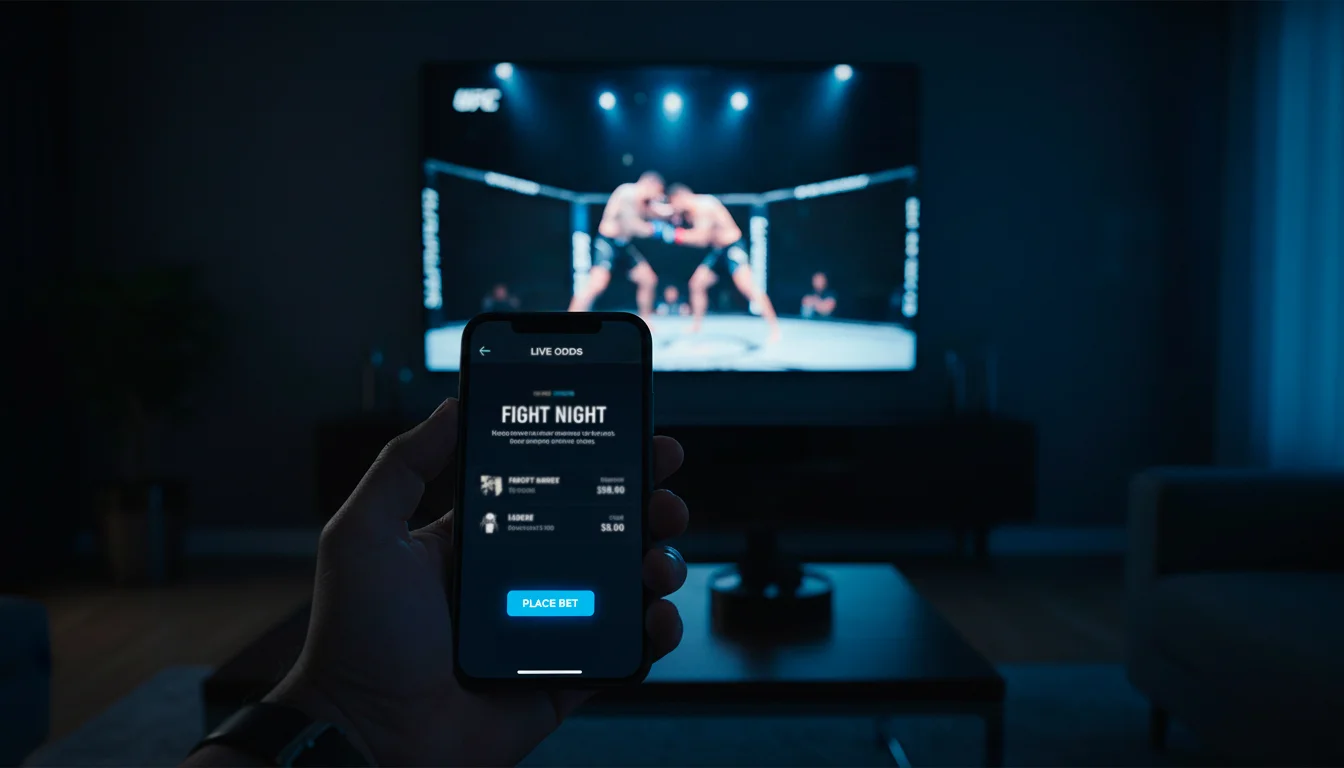
Live UFC betting opens the moment a fight begins and stays active between rounds, closing temporarily during each round at some bookmakers or remaining open throughout at others. The experience is fundamentally different from placing a pre-fight bet because you are reacting to events as they unfold rather than predicting them in a vacuum.
When a round starts, the odds on each fighter shift based on real-time action. A clean knockdown from the underdog might cut the favourite’s moneyline in half within seconds. A dominant takedown that pins a fighter against the cage for two minutes will push the controlling fighter’s odds sharply lower. These movements are driven by a combination of algorithmic models, live data feeds, and the bets being placed by other punters — creating a feedback loop where the market is constantly re-pricing the fight based on what just happened.
Between rounds, most bookmakers re-open the full range of in-play markets. This sixty-second window is where I do the majority of my live betting. The chaos of mid-round movement has settled, the round scoring is clearer, and I can assess the state of the fight with a cooler head. A fighter who lost round one on the scorecards but showed no physical damage and maintained their composure is a very different live bet from a fighter who lost round one and is visibly exhausted or cut. The between-rounds window gives you time to make that distinction.
One critical detail: latency matters. There is always a slight delay between what you see on screen and what the bookmaker’s odds reflect. On a fast-paced UFC fight, that delay can mean the odds have already moved past the price you thought you were getting. I have had bets rejected because the odds shifted in the fraction of a second between tapping “place bet” and the system confirming the wager. If you are serious about live betting, make sure you are on a fast, stable connection and using the bookmaker’s app rather than a mobile browser.
What You Can Bet On During a Live UFC Fight
Not every market that exists pre-fight remains available once the cage door closes. Live UFC markets are typically a stripped-down version of the full pre-fight menu, focused on the bets that can be priced reliably as the action unfolds.
The live moneyline — who wins the fight — is the bread and butter of in-play UFC betting. It is available throughout the fight at virtually every bookmaker and moves constantly. Next-round winner markets let you bet on which fighter will win a specific upcoming round, effectively creating a series of micro-bets within the larger fight. Over/under total rounds adjusts as each round passes, reflecting the updated probability that the fight will go the distance.
Some bookmakers also offer live method of victory, though this market tends to close during rounds and re-open only between them. “Fight to go the distance” yes/no is another common in-play proposition, and its odds shift dramatically with each passing round — once a fight reaches round three of a five-rounder without a finish, the “yes” price can collapse from 3/1 to even money or shorter.
The depth of live markets varies significantly between bookmakers. Larger operators with dedicated combat sports teams tend to offer more granular in-play options, while smaller shops might restrict live betting to the moneyline only. If in-play wagering is a core part of your approach, account selection matters — not all platforms are equal when it comes to live UFC coverage.
Round-by-Round Betting Opportunities
Round betting takes on a different character when the fight is live. Pre-fight, you are guessing which round a finish might occur in. Live, you are watching the fight develop and identifying when a finish becomes imminent based on what you are actually seeing — a fighter who is slowing down, absorbing damage, or struggling to defend takedowns.
I look for specific triggers. If a fighter’s output drops by more than 30% between rounds one and two, their cardio is suspect and the probability of a late stoppage rises. If a grappler has failed on four consecutive takedown attempts, they are burning energy without advancing position, which tilts the fight toward the striker as the rounds progress. These observations translate directly into round-specific live bets that carry substantially better odds than the same bets would have pre-fight.
The sharpest live bettors I know treat each round break as a fresh market opening. They reassess their pre-fight thesis, check whether the live odds reflect what they have just watched, and act only when the market has mispriced the next round’s outcome. That discipline — betting on what you see rather than what you hoped to see — is the single biggest differentiator in live UFC betting.
How Live Odds Move in Real Time
Watching UFC live odds is like watching a stock ticker during a market crash: the numbers move in sudden, violent jolts that can reverse direction just as quickly. A fighter priced at 1/5 before the opening bell can be 2/1 thirty seconds later if they get caught with a clean shot and visibly wobbled.
Nearly half of all heavyweight fights end by knockout — 49% — which means the live odds in heavyweight bouts are among the most volatile in any sport. A single punch can flip the entire market. Lighter divisions produce less dramatic live movement because the knockout rate drops and fights are more likely to progress through multiple rounds, giving the odds time to settle into a trend rather than spiking chaotically.
The speed of live odds movement also depends on how much money is flowing into the market. High-profile main events attract massive live-betting volume, which means the odds reflect crowd sentiment almost instantly. Undercard fights with lower volume move more sluggishly, and there are moments where the live odds lag behind the action you are watching. Those lag windows are genuine opportunities — but they are narrow, measured in seconds rather than minutes, and they require both preparation and speed to exploit.
I keep a simple mental model during live fights: if the live moneyline has moved 20% or more from the pre-fight price but the fighter’s physical condition and tactical position do not justify that movement, the market has overreacted. Overreactions are most common after a flashy moment that looks dramatic on screen but did not actually compromise the fighter — a takedown that is immediately reversed, a strike that lands clean but does not wobble the opponent. Training your eye to distinguish between a fight-changing moment and a cosmetic one is the core skill of live odds reading.
I also track what I call “drift fights” — bouts where the live odds gradually shift in one direction across multiple rounds without a single dramatic moment causing the move. These slow drifts usually reflect the accumulation of small edges: one fighter consistently winning the jab exchanges, landing the cleaner shots, and controlling the centre of the octagon. Drift fights are the hardest to spot in real time because nothing explosive happens, but they offer some of the most reliable live value because the market often takes two or three rounds to fully price in the emerging pattern. By the time the moneyline has drifted from 4/5 to 2/5, the value has usually evaporated — but catching it at the 4/6 mark, when the pattern is clear but the market is still adjusting, is where the profit sits.
UFC Events and UK Time Zones: What to Expect
There is no getting around it: UFC events are scheduled for American audiences, and that means UK fans are watching at antisocial hours. Most main cards from North American venues start at around 3am GMT, with the main event typically walking to the octagon between 5am and 6am. Fight Night cards start slightly earlier, and events held in Abu Dhabi or Europe offer the rare treat of prime-time scheduling for UK viewers.
UFC 229 — the Khabib versus McGregor card that drew 2.4 million pay-per-view buys, a record that still stands — started at 3am UK time. That is the trade-off: the biggest events in the sport land squarely in the middle of the night for British punters. If you are planning to live bet a US-based card, you need to decide whether the full card is worth staying up for or whether you are setting an alarm for the main event only.
From a live-betting perspective, the timing creates an unusual dynamic. The UK betting public is smaller during these early-morning hours, which means live markets on UK-facing bookmakers can be thinner and less responsive than they would be for a Saturday afternoon Premier League fixture. That thinness cuts both ways: there is less volume to move the odds quickly, but there are also fewer sharp bettors competing for the same edges.
I have settled into a routine that works for me. For numbered UFC events and title fights, I set an alarm for the co-main event and watch the last two fights live. For Fight Night cards, I usually watch the replay in the morning and limit my live betting to pre-fight positions placed before I go to sleep. The worst thing you can do is live bet while half-asleep at 4am — your judgment is compromised, your reaction time is slower, and the market does not care how tired you are.
One scheduling detail worth knowing: UFC typically runs around forty events per year, which means there is a card almost every weekend. The sheer frequency is both an opportunity and a trap. You do not need to live bet every single event. I select two or three cards per month where the matchups align with my strongest analytical reads and skip the rest entirely. Quality of preparation beats quantity of action every time.
Live Betting Strategy for UFC
Pre-fight strategy and live strategy share the same analytical roots but demand completely different execution. Pre-fight, you have days to research, model, and deliberate. Live, you have seconds. The fighters who succeed in the octagon are the ones who prepare exhaustively and then execute instinctively — and the same principle applies to live betting.
My live strategy starts before the fight begins. I set pre-fight trigger points: if Fighter A gets taken down in round one, I will look to back Fighter B on the live moneyline. If the fight is still standing after round two, I will consider the over on total rounds. These conditional plans let me act quickly during the fight without making decisions from scratch under pressure. About 45% of UFC fights end by KO/TKO, so I always have a knockout scenario mapped out for both fighters before the opening bell.
The overall UFC finish rate sits at 53%, which means just under half of all fights reach the judges. That baseline shapes my live approach: if a fight reaches round three of a three-rounder without either fighter being in serious trouble, the “goes the distance” prop often offers poor value because the market has already priced in the high likelihood of a decision. The value in late rounds tends to sit with fighters who have a pattern of finishing opponents when the pace drops — wrestlers who accumulate top control, body punchers who break down opponents over time.
Reading Momentum Between Rounds
The sixty-second rest between rounds is the live bettor’s equivalent of halftime analysis, compressed into a minute. I watch the corners closely. Which fighter sits down first? Who is breathing harder? Is the cornerman giving technical instructions or emotional encouragement? These micro-signals tell you who is winning the fight behind the scenes, regardless of what the scorecards might say.
Momentum in UFC fights is real but often misread. A fighter who lost round one by getting outstruck on the feet might come out in round two with adjusted footwork and a completely different game plan. Betting against a fighter purely because they lost one round ignores the possibility of tactical adaptation. Conversely, a fighter who won round one through volume but looked increasingly tired as the round progressed might be on borrowed time.
The best live bettors I know are not reacting to what just happened — they are predicting what happens next based on what they have seen. If Fighter A threw 40 strikes in round one and landed 30%, the raw volume might have won the round on the scorecards. But if Fighter B spent that round reading timing and showed zero damage, Fighter B is the live play going into round two because the adjustment is coming. Reading momentum is about trajectory, not score.
Managing Your Bankroll During Live Betting
Nicholas Smith from TKO described bet365 as understanding how fight fans engage “with the sport in real time.” That real-time engagement is exactly what makes live bankroll management so difficult — the emotional intensity of watching a fight while your money is on the line creates impulses that pre-fight betting simply does not.
My bankroll rules for live betting are stricter than my pre-fight rules. I allocate a maximum of 20% of my total fight-night bankroll to live bets, and I never exceed one unit on any single in-play wager. The temptation to “double down” after watching your pre-fight pick get hurt is enormous, and it is almost always a bad decision. If your pre-fight analysis was sound, the live odds have already moved to reflect the new information. Chasing the loss by increasing your stake at worse odds is the fastest way to blow up a bankroll.
I also set a hard loss limit for live betting: if I lose three consecutive in-play bets on a single card, I stop for the night. This rule has saved me more money than any analytical framework ever has. The emotional cascade of live losses is real — each one makes the next bet feel more urgent and less disciplined. Stepping away when the losses mount is not weakness; it is the single most profitable decision you can make on a bad night.
Technology Behind UFC Live Odds
The machinery behind live UFC odds is more sophisticated than most punters realise. bet365’s five-year partnership with UFC, announced in March 2026, was built explicitly around the integration of real-time fight data into live betting platforms. The deal reflects an industry-wide push toward faster, more granular in-play products driven by algorithms rather than human traders.
Modern live odds on UFC fights are generated by algorithms that process real-time strike counts, takedown data, and positional information. These feeds update every few seconds, and the odds adjust accordingly. The human trading team still oversees the process — particularly for unusual situations like a controversial stoppage or a fight-ending injury — but the baseline movement is algorithmic. That speed is what allows bookmakers to keep live markets open during rounds rather than closing them entirely, which was the standard practice as recently as five years ago.
For UK bettors, the technology gap between bookmakers is meaningful. Operators with direct data partnerships and dedicated MMA trading desks offer tighter spreads, more market depth, and faster bet acceptance on live UFC wagers. Smaller operators relying on third-party feeds may have a noticeable delay in their odds updates, which occasionally creates arbitrage opportunities — but also increases the likelihood of bet rejections when the odds move against you before your wager is confirmed. If live betting is a core part of your strategy, the platform you use matters as much as the bets you place.
UFC Live Betting: Your Questions Answered
Can I place live bets during a UFC fight at UK bookmakers?
Yes. All major UK-licensed bookmakers offer live betting on UFC events. Markets typically include the live moneyline, next-round winner, over/under total rounds, and in some cases method of victory and distance props. The range and depth of available live markets varies between operators, with larger sportsbooks generally offering more options.
How quickly do in-play odds change during a UFC bout?
UFC live odds can shift within seconds, especially during heavyweight bouts where a single punch can change the fight. Algorithmic pricing models update based on real-time strike and takedown data every few seconds. The most volatile movements occur immediately after a significant strike, knockdown, or takedown, and during the sixty-second rest period between rounds.
What time do UFC events typically start in the UK?
Most UFC events held in North America have their main cards starting around 3am GMT, with the main event typically taking place between 5am and 6am. Fight Night cards may start slightly earlier. Events held in Abu Dhabi, Europe, or Asia offer more convenient timing for UK viewers, sometimes falling in the late afternoon or evening.
Is live betting on UFC riskier than pre-fight betting?
Live betting carries higher variance because decisions are made under time pressure with incomplete information. Odds move rapidly, emotional reactions can override analysis, and the window for placing bets is narrow. However, live betting also offers opportunities to exploit real-time information that pre-fight markets cannot account for. Managing risk through strict bankroll limits and pre-set conditional plans is essential.
Published by the how Does ufc Betting Work team.