UFC AI Odds and Betting Technology: How Algorithms and Crypto Are Changing the Game
 Available in US

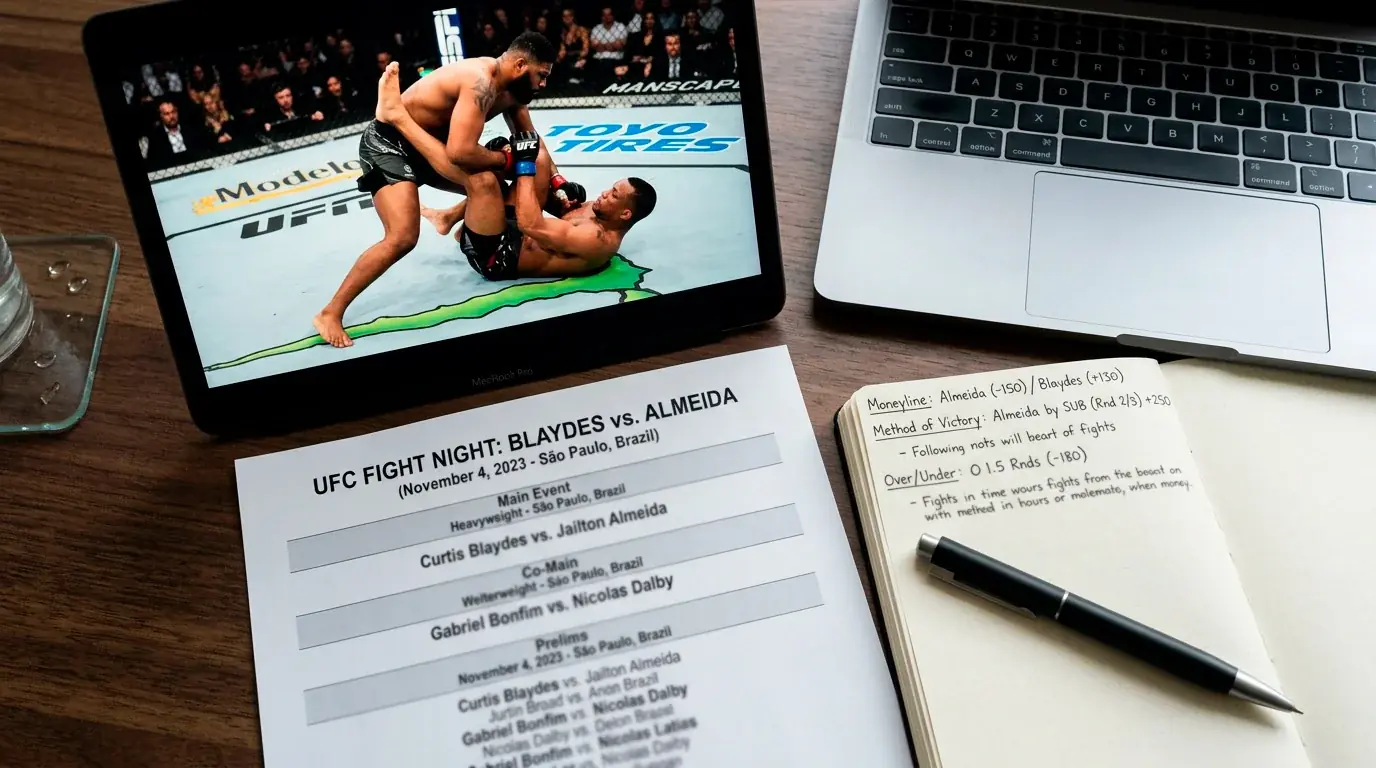
Three years ago, I could identify soft lines on UFC undercards by checking odds at three bookmakers on a Tuesday morning. The prices would sit there for hours, sometimes days, before correcting. Today, the same lines correct in minutes. The reason isn’t that more humans are scrutinising flyweight prelim bouts — it’s that AI-powered pricing models have permeated every major sportsbook, processing data and adjusting odds at speeds no human analyst can match. The technology reshaping UFC betting isn’t a future prospect; it’s the present reality, and understanding it is essential for anyone trying to find edges in a market that’s growing more efficient with every card.
Alongside algorithmic odds, prediction markets and cryptocurrency platforms are introducing entirely new ways to wager on UFC outcomes. This guide examines all three forces — AI, prediction markets, and crypto betting — and assesses what they mean for the UK bettor navigating a market in technological flux.
AI-Powered Odds in UFC Betting
The global combat sports betting market is projected to grow at a CAGR of 9-14% through 2033, and a meaningful share of that growth is being driven by technology that makes odds-setting faster, more accurate, and more responsive to real-time information. AI-powered odds models ingest vast datasets — historical fight outcomes, per-round strike statistics, grappling metrics, fighter age curves, weight cut patterns, even social media sentiment — and produce probability estimates that bookmakers use as the foundation for their lines.
The models work by identifying patterns in historical data that correlate with fight outcomes. A traditional odds compiler might assess a fight by watching tape, reading statistics, and applying their experience. An AI model processes thousands of comparable historical matchups simultaneously, weights the variables by predictive power, and outputs a probability distribution that accounts for interactions between variables that a human analyst might miss or underweight. The result is opening lines that are, on average, more accurate than they were a decade ago.
For bettors, this means the era of easily exploitable mispriced lines is ending. When the bookmaker’s opening line is generated by an algorithm trained on millions of data points, the probability of that line being significantly wrong is lower than when it was set by a human team working from spreadsheets and intuition. The edges still exist — no model is perfect, and combat sports carry irreducible uncertainty that algorithms can’t eliminate — but the edges are narrower and require more sophisticated analysis to identify.
The live betting environment is where AI’s impact is most visible. In-play odds that update within seconds of significant fight events — a knockdown, a takedown, a submission attempt — are processed by algorithms that assess the event’s impact on win probability and adjust the line accordingly. The speed of these adjustments has compressed the window for live betting value from minutes to seconds. If you spot a mispriced live line, you typically have less than thirty seconds before the algorithm corrects it. That time pressure favours bettors with prepared analytical frameworks and fast decision-making — precisely the kind of disciplined approach that this site advocates.
One area where AI models still struggle is accounting for intangible factors: fighter motivation, mental state, coaching changes, and the X-factor of individual combat sports performance. A fighter’s emotional response to a booing crowd, their confidence level after a recent loss, or their determination in a contract-year fight — these variables aren’t captured in the statistical datasets that power most AI models. Bettors who can assess these intangibles accurately have one of the remaining genuine edges over algorithmic pricing.
Prediction Markets and Polymarket
Prediction markets represent a fundamentally different model for pricing UFC outcomes. Instead of a bookmaker setting odds and taking the other side of your bet, prediction markets function as exchanges where participants trade contracts that pay out based on the result. The price of each contract reflects the collective assessment of all market participants, creating a crowd-sourced probability that can be compared to traditional bookmaker odds.
Polymarket, the most prominent crypto-native prediction market, has offered UFC fight contracts on multiple occasions, particularly for high-profile pay-per-view events. The contracts are priced between zero and one dollar, where the price represents the market’s implied probability. A contract on Fighter A priced at 0.65 implies a 65% win probability. You can buy the contract if you think the probability is higher than 65%, or sell (short) it if you think it’s lower.
For analytical bettors, prediction markets serve as a valuable benchmarking tool. Comparing the Polymarket consensus price against the bookmaker’s implied probability (with vig removed) reveals where the two markets disagree. When a prediction market prices a fighter at 60% and the bookmaker (after vig removal) prices them at 55%, one market is wrong — and identifying which one provides a directional signal for your bet. Neither market is consistently more accurate than the other, but the disagreements between them are worth investigating.
The limitations of prediction markets for UFC are practical. Liquidity on Polymarket’s UFC contracts is typically much lower than at major sportsbooks, which means the prices can be moved by relatively small amounts of money. A few thousand dollars of informed action can shift the Polymarket price significantly, while the same amount at a major bookmaker would barely register. Lower liquidity also means wider effective spreads and more difficulty executing large positions without moving the market against yourself.
Cryptocurrency Betting on UFC
Crypto betting on UFC exists in a grey area for UK residents. UKGC-licensed operators generally don’t accept cryptocurrency deposits, and crypto-native betting platforms generally don’t hold UKGC licences. This creates a practical divide: if you want the consumer protections of a regulated UK market, you bet with pounds at a licensed bookmaker. If you want the pseudonymity and speed of crypto betting, you’re operating outside the regulated framework and accepting the risks that come with that choice.
Mark Shapiro, TKO’s president, described the UFC’s approach to partnerships as “thoughtful and strategic” — and that caution extends to the crypto space. While UFC has explored blockchain-based products (NFTs, fan tokens), the promotion’s official betting partnership with bet365 is firmly within the regulated, fiat-currency sportsbook model. There’s no indication that UFC will officially endorse or integrate a crypto-native betting platform in the near term.
For UK bettors, the regulatory picture is clear. The UKGC does not license crypto-only gambling operators, and using unlicensed platforms means forfeiting every consumer protection the regulated market provides: fund segregation, dispute resolution, responsible gambling tools, and enforcement against fraud. The convenience and novelty of crypto betting don’t offset the absence of these protections, particularly for bettors with meaningful amounts at stake. My consistent advice is to bet within the regulated system, accept the minor inconveniences of traditional deposits and withdrawals, and treat unregulated crypto platforms as a risk you don’t need to take.
That said, the technology underlying crypto betting — blockchain-based settlement, smart contracts for automated payouts, transparent on-chain records — has genuine potential to improve the betting experience if it’s eventually adopted within regulated frameworks. Several European jurisdictions are exploring regulatory pathways for crypto-integrated gambling, and the UK may follow. If and when that happens, the combination of blockchain transparency and UKGC oversight could create a betting environment that’s both more innovative and more trustworthy than what currently exists on either side of the divide.
Adapting to a Faster Market
AI, prediction markets, and crypto aren’t abstract trends — they’re actively reshaping the UFC betting landscape that you operate in every fight night. The market is getting faster, more efficient, and more technologically sophisticated. For bettors, that means the analytical bar is rising. The casual bettor who relies on gut feelings and favourite backing is competing against algorithms that process more data in a second than a human can in a week. The edges that remain are in the areas that technology handles least well: intangible fighter assessment, fight-week intelligence, stylistic matchup analysis that goes beyond statistics, and the discipline to act on value when the window is brief.
Embrace the tools that technology offers — odds comparison sites, statistical databases, probability calculators — while recognising that the technology also makes the market harder to beat. The bettors who thrive in this environment aren’t the ones fighting the algorithms; they’re the ones working alongside them, using technology to enhance their analysis and human judgement to fill the gaps that algorithms can’t. That combination — technological awareness plus analytical depth — is the formula for staying competitive in a market that evolves with every card.
Are AI-generated odds more accurate for UFC fights than traditional bookmaker lines?
AI-generated odds are generally more accurate on average than lines set purely by human judgement, because they process larger datasets and identify statistical patterns more efficiently. However, they are not uniformly superior. AI models struggle with intangible factors like fighter motivation, mental state, and the impact of coaching changes — areas where experienced human analysts retain an edge. The most accurate lines tend to emerge from a combination of algorithmic modelling and human oversight, which is the approach most major bookmakers now use.
Can UK residents legally bet on UFC using cryptocurrency?
UK residents can technically use crypto betting platforms, but these platforms generally do not hold UKGC licences, which means they operate outside the UK’s regulated gambling framework. Using unlicensed platforms forfeits all consumer protections including fund segregation, dispute resolution, responsible gambling tools, and regulatory oversight. UKGC-licensed operators generally do not accept cryptocurrency deposits. For the full suite of legal protections available to UK bettors, betting with pounds at a UKGC-licensed sportsbook remains the recommended approach.
Prepared by the how Does ufc Betting Work editorial staff.