UFC Weigh-In Betting Analysis: Pre-Fight Signals That Move the Odds
 Available in US
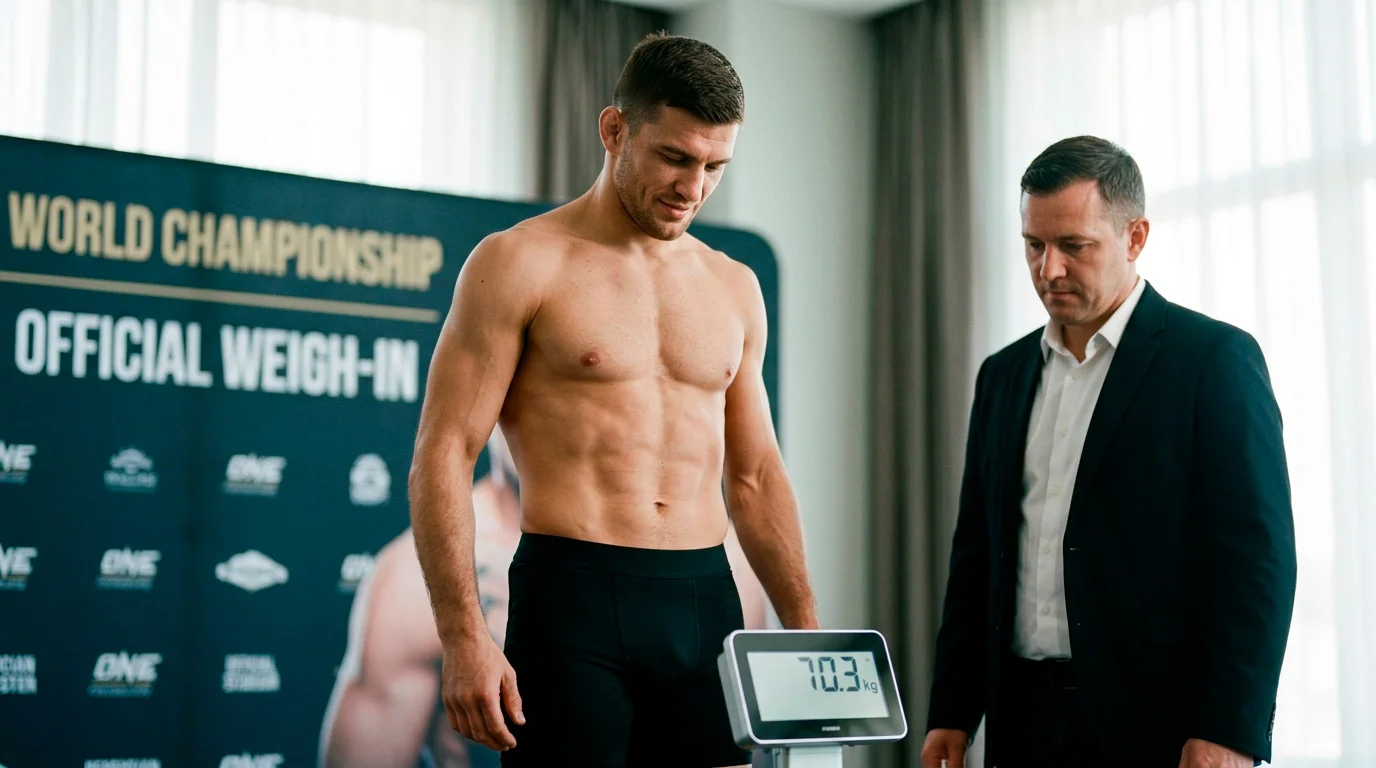
I once watched a fighter step on the scales looking like he’d spent the last three days in a sauna — sunken eyes, hollow cheeks, visibly trembling. He made weight by half a pound. The line barely moved. Twenty-four hours later he was knocked out in the first round, his legs buckling under a jab that would normally be absorbed without issue. The weigh-in had told the whole story, but the market hadn’t listened. That disconnect — between what fight-week signals reveal and what the odds reflect — is where some of the sharpest edges in UFC betting live.
Fight week is the most information-rich period in the UFC betting calendar. Weigh-ins, open workouts, media appearances, camp reports, and social media all generate data that can move odds or confirm your existing analysis. The challenge is separating the signals that genuinely predict performance from the noise that merely generates headlines.
What Weigh-In Results Tell Bettors
Underdogs become favourites in 23% of UFC main events within 48 hours of weigh-ins. That statistic captures the magnitude of information that flows into the market during the weigh-in window — it’s enough to completely reverse the expected outcome in nearly a quarter of top-billing fights. Weigh-ins aren’t just ceremonial; they’re the first moment in fight week where the market has hard, verifiable data about both fighters’ physical condition.
A fighter who misses weight faces immediate consequences: a percentage of their purse forfeited to the opponent, potential loss of title eligibility, and — most importantly for bettors — a data point about their preparation. Missing weight usually indicates a difficult cut, which can mean compromised hydration, reduced energy reserves on fight night, and a body that’s been pushed beyond its comfortable operating range. The market typically moves against a fighter who misses weight, but the magnitude of the move varies. A fighter who misses by half a pound on first attempt and makes it on a second try is very different from a fighter who comes in three pounds over and doesn’t attempt to recut.
Even when both fighters make weight, the visual data is revealing. A fighter who looks significantly larger than their opponent after rehydration has a physical advantage that may not be fully captured in the pre-weigh-in odds. Size discrepancies at weigh-in suggest different approaches to weight cutting — the larger fighter is likely cutting more aggressively and rehydrating to a bigger fight-night weight, which can translate into power, durability, and cage control advantages.
The timing of the weigh-in itself can be informative. Fighters who weigh in early — first or second on the card — are typically confident in their weight. Fighters who wait until the final minutes of the weigh-in window may be cutting last-minute water weight or dealing with unexpected difficulties. This isn’t a universal rule — some fighters prefer to weigh in at a specific time regardless of their weight status — but when combined with other signals, late weigh-ins can flag potential issues worth monitoring.
Southpaw-versus-orthodox dynamics gain an additional layer at weigh-ins. Bouts between opposite-stance fighters produce finishes 18% more frequently than same-stance matchups, and a weigh-in that reveals a physical mismatch in a cross-stance fight amplifies the already elevated finish probability. If the southpaw is the noticeably bigger fighter and carries the stance advantage, the combination can represent a value pocket the market hasn’t fully priced.
Camp Changes, Injury Reports and Social Media
Weigh-ins get the headlines, but the broader fight-week information environment is equally important. Training camp reports trickle out through MMA media throughout the final weeks before an event, and the quality of those reports varies enormously. A credible journalist reporting that a fighter changed camps mid-preparation is meaningful signal. A random social media account claiming a fighter looked “off” in open workouts is noise.
Injury disclosures during fight week require careful interpretation. Fighters routinely enter bouts with minor injuries — sore hands, tweaked knees, nagging shoulders — and most of them perform adequately despite the issues. The question isn’t whether a fighter has an injury (most do) but whether the injury specifically compromises their primary path to victory. A wrestler with a knee injury is a different proposition from a striker with a knee injury; the wrestler’s game plan depends on explosive level changes that a compromised knee makes significantly harder.
Social media has become both a data source and a minefield for fight-week analysis. Fighters and their teams post training footage, weight-cut updates, and motivational content that can reveal conditioning levels, mood, and preparation quality. But social media content is also curated and strategic — a fighter might post a video looking sharp specifically to influence the odds, or stay silent specifically to generate uncertainty. I treat social media as supplementary data, never as primary evidence. If the social media signal aligns with other fight-week data points (weigh-in appearance, credible media reports, camp history), it adds confidence to the picture. If it contradicts everything else, I ignore it.
Coaching corner assignments for fight night are one of the most overlooked fight-week signals. The identity and composition of a fighter’s corner team tells you about their tactical approach. A fighter bringing a wrestling-specific coach to their corner for a fight against a striker is signalling a grappling-heavy game plan. A fighter bringing a boxing specialist suggests they intend to keep the fight standing. These choices don’t appear in the odds directly, but they inform your analysis of how the fight is likely to play out.
When and How to Act on Fight-Week Information
The central dilemma of fight-week betting is timing. Information that emerges after weigh-ins is available to everyone, which means the market adjusts quickly and the window for exploiting it is narrow. Acting on information before weigh-ins requires accepting greater uncertainty — you’re betting on partial data with the knowledge that new information could invalidate your position within hours.
My approach is to set preliminary positions early in the week based on my pre-fight analysis, then adjust those positions after weigh-ins if the new information warrants it. If my pre-fight analysis says Fighter A at 6/4 is value, I’ll take a partial position on Monday or Tuesday. After weigh-ins, if Fighter A looks strong and the opponent appears drained, I’ll add to the position. If the weigh-in data contradicts my analysis — Fighter A comes in looking depleted or the opponent rehydrates to a significantly larger frame — I reassess and sometimes close the position entirely.
The key principle is that fight-week information should confirm or challenge your existing analysis, not replace it. A fighter who looks good at weigh-ins but whose statistical profile doesn’t support the bet is still a bad bet. A fighter who looks rough at weigh-ins but whose stylistic advantages remain intact might still be worth backing, albeit with reduced confidence and a smaller stake. The weigh-in is one data point in a constellation of evidence — an important one, but not the only one.
Speed matters when acting on weigh-in information. The line moves fastest in the thirty minutes immediately following the weigh-in broadcast, as sharp bettors and algorithms process the visual and numerical data simultaneously. If you’re not positioned before the weigh-in or acting within that first window, the value has likely already been captured. This is one reason I recommend doing your fight analysis early in the week rather than waiting for weigh-in day — being prepared lets you act quickly when the strategic opportunity presents itself.
How does a missed weight affect UFC betting odds?
A missed weight typically causes the odds to shift against the fighter who missed, reflecting the market’s assessment that their preparation was compromised. The magnitude of the shift depends on the severity of the miss — half a pound on first attempt might move the line marginally, while missing by two or more pounds can trigger a significant correction. Some bookmakers may void existing bets and reprice the fight entirely, while others simply adjust the odds on their current markets.
When do UFC weigh-ins happen relative to fight night in the UK?
Official UFC weigh-ins typically take place on Friday morning in the US, which translates to Friday afternoon or early evening in UK time. Ceremonial weigh-ins (the face-off event) usually follow several hours later, in the UK’s late evening. Fight night is then Saturday evening US time, meaning early Sunday morning for UK viewers. This gives UK-based bettors approximately 12-18 hours between official weigh-in results and the first bets of fight night to process the information and adjust positions.
Published by the how Does ufc Betting Work team.