UKGC-Licensed UFC Bookmakers: How to Check a Site Is Regulated
 Available in US
A few years back, a bettor I know placed a four-figure accumulator on a UFC card through an unlicensed offshore operator. He won. Then he tried to withdraw, and the site demanded three rounds of identity verification, imposed a withdrawal limit he’d never been told about, and eventually went dark — along with his money. That story isn’t unusual. It’s the predictable outcome of trusting an unregulated platform with your bankroll, and it’s entirely avoidable if you know how to verify that a bookmaker holds a valid UK Gambling Commission licence.
Between April and December 2025, the UKGC issued 592 cease-and-desist notices to unlicensed operators and secured the removal of over 203,000 URLs from search engines. Tim Miller, a UKGC director, outlined those numbers publicly — they reflect the scale of the unlicensed market and the regulator’s active effort to shrink it. This guide explains what a UKGC licence actually guarantees, how to verify one in thirty seconds, and what UFC-specific features to compare once you’ve confirmed a site is legitimate.
What a UKGC Licence Means for Bettors
A UKGC licence isn’t a quality award — it’s a set of legally binding obligations that the operator must meet to serve UK customers. Those obligations cover everything from how your deposits are held to how disputes are resolved, and they exist because the UK treats gambling as a regulated activity that requires specific consumer protections.
The most immediately relevant protection is funds segregation. Licensed operators must keep customer funds separate from operational funds, or at a minimum disclose their level of player fund protection. This means that if the bookmaker runs into financial difficulty, your deposited money has a defined level of protection rather than being mixed into the company’s general accounts. The three tiers — basic, medium, and high — are disclosed on the operator’s website, and higher protection means your funds are held in segregated accounts or protected by insurance.
Licensed bookmakers are also required to offer responsible gambling tools: deposit limits, loss limits, session time reminders, cooling-off periods, and self-exclusion through the GamStop scheme. These aren’t optional features — they’re regulatory requirements. An unlicensed operator has no obligation to offer any of them, and most don’t.
Dispute resolution is another critical protection. If you have a complaint about a UKGC-licensed bookmaker that can’t be resolved directly, you have the right to escalate to an approved Alternative Dispute Resolution (ADR) provider. The ADR body reviews the case independently and can issue a binding decision. Try that with an offshore operator and you’ll quickly discover that “customer support” extends precisely as far as the operator’s goodwill — which, once your money is at stake, tends to be limited.
The UKGC also mandates identity verification (KYC), anti-money-laundering checks, and advertising standards compliance. These requirements can feel bureaucratic when you’re trying to place a bet quickly, but they exist for a reason: they make the regulated market substantially safer than the unregulated alternative, and they give you legal recourse if something goes wrong.
How to Verify a Bookmaker’s Licence
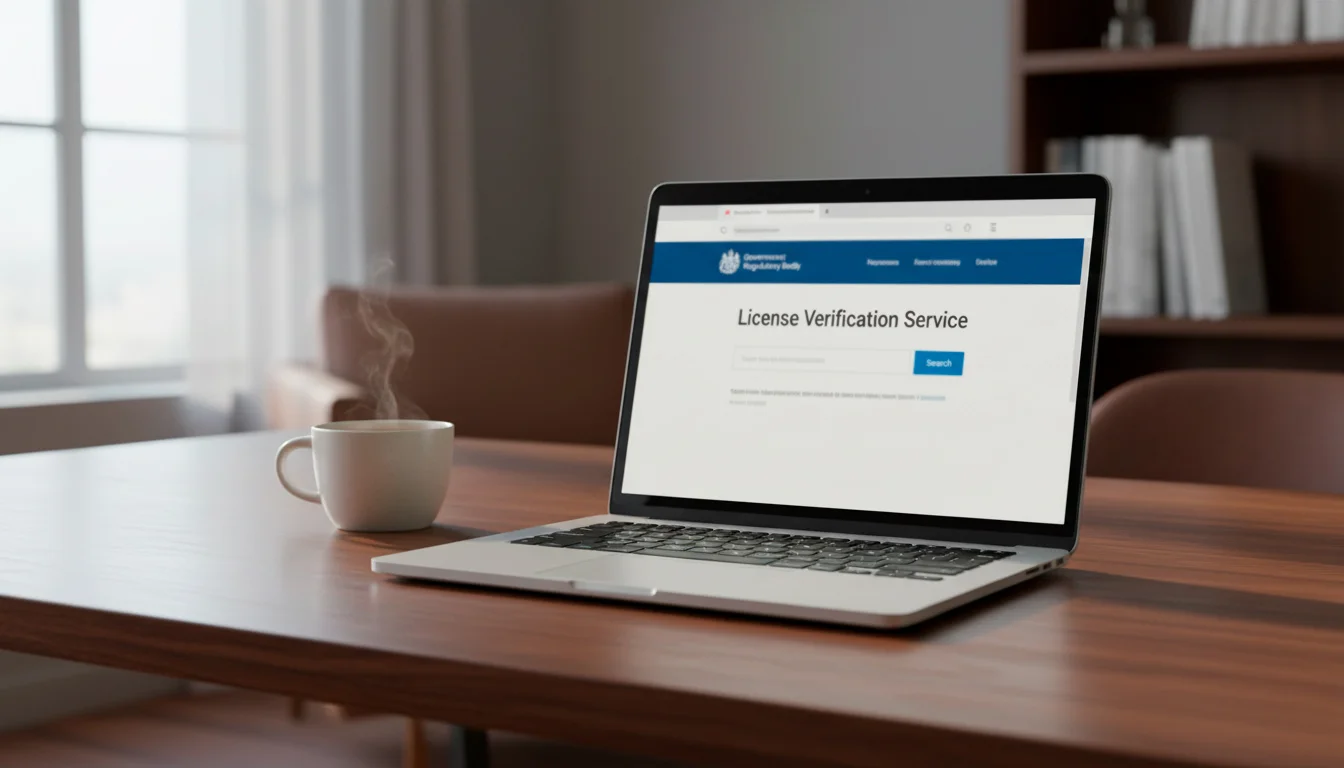
I check every new platform I consider using, and the process takes less than a minute. The UKGC maintains a public register of all licensed operators on its website. You can search by the operator’s name, and the register shows the licence number, the status (active, suspended, or revoked), the activities covered (betting, casino, bingo), and any regulatory actions taken against the operator.
The fastest verification method is to look at the bookmaker’s website footer. Every UKGC-licensed operator is required to display their licence number and a link to the Gambling Commission’s website. If the footer shows a licence number, you can cross-reference it against the public register. If there’s no licence number visible, that’s an immediate red flag — either the site isn’t licensed, or it’s not complying with its display obligations, which itself suggests poor regulatory adherence.
Be cautious of sites that display a licence number from a different jurisdiction — Malta, Gibraltar, Curacao, or the Isle of Man — without also holding a UKGC licence. Some of those jurisdictions have credible regulatory frameworks; others are essentially rubber stamps. For UK customers, only a UKGC licence provides the full suite of consumer protections, including access to ADR, GamStop integration, and the UKGC’s enforcement powers. A Malta Gaming Authority licence is better than no licence at all, but it doesn’t carry the same protections for UK residents.
One thing I’ve noticed: unlicensed operators often mimic the visual design and branding of established, licensed bookmakers. They’ll use similar colour schemes, similar layout patterns, and similar promotional language. The difference is always in the details — the licence footer, the terms and conditions, the deposit and withdrawal methods. If a site looks familiar but the details don’t check out, trust the verification process over the visual impression.
UFC-Specific Features to Compare Across Sites
Once you’ve confirmed a bookmaker is UKGC-licensed, the comparison shifts to what matters for UFC betting specifically. Not all licensed operators offer the same depth of MMA markets, and the differences can significantly affect your betting experience.
Market depth is the most important variable. Some bookmakers offer only moneyline and over/under markets for UFC events; others provide method of victory, round betting, round groups, time of finish, fight-length props, and same-game parlay builders. If your strategy relies on prop bets or round selections, a bookmaker with limited UFC market depth will constrain your options regardless of how competitive their moneyline prices are.
bet365 replaced DraftKings as the UFC’s official betting partner in March 2026 under a five-year deal, and that partnership has implications for market depth and pricing at the platform. Official betting partners typically invest in more comprehensive coverage of the sport they’re partnered with, including more markets, faster odds updates, and promotional features tied to UFC events. That doesn’t mean bet365 is automatically the best option for every UFC bettor, but the partnership does signal a commitment to the sport that’s worth noting when comparing platforms.
Live betting availability varies substantially. Some operators keep in-play markets open throughout UFC fights with minimal delays; others suspend markets frequently during exchanges or restrict the available live bet types. If live betting is part of your approach, test the platform’s live experience during a free-to-watch event before committing real money.
Odds competitiveness is, obviously, a factor — but it’s less important than many bettors assume. The difference between the best and worst price on a UFC moneyline at major UK bookmakers is typically one or two percentage points of implied probability. That matters over hundreds of bets, but it matters less than market depth, cash-out availability, and the reliability of the platform’s legal and regulatory standing in the UK. A bookmaker offering slightly worse odds but a vastly better UFC product is the smarter choice for anyone who takes MMA betting seriously.
Choosing With Confidence
The UK’s regulated gambling market exists to protect you. It’s not perfect, and no regulatory framework can eliminate every risk, but the difference between a UKGC-licensed operator and an unlicensed alternative is the difference between a market where rules exist and are enforced, and one where your only protection is the operator’s willingness to treat you fairly — a willingness that tends to evaporate the moment it’s tested. Verify the licence, compare the UFC-specific features, and bet with operators who have something to lose if they treat you badly. Everything else is unnecessary risk.
Where can I check whether a UFC betting site has a valid UKGC licence?
The UK Gambling Commission maintains a public register of all licensed operators on its official website. You can search by the operator’s name or licence number to confirm their status, the activities they are licensed for, and any regulatory actions on record. Additionally, every UKGC-licensed bookmaker is required to display its licence number in the website footer, which you can cross-reference against the register.
What protections does a UKGC licence guarantee for my deposits?
UKGC-licensed operators must disclose their level of customer fund protection, which falls into three tiers: basic, medium, or high. At the highest tier, customer funds are held in fully segregated accounts or protected by equivalent insurance, meaning your money is ring-fenced from the operator’s business funds. Even at the basic level, the operator must disclose the risk to your funds. Licensed operators are also required to offer responsible gambling tools and provide access to independent dispute resolution if complaints arise.
Published by the how Does ufc Betting Work team.